Showing posts with label Letters. Show all posts

26.2.17

Two


We’re two dancing feet. We’re return train tickets. We’re wheels on a bike. We’re spare shoelaces. We’re two lost ducklings. We’re budget sunglasses. We’re backpack straps. We’re a double-yolk egg. We’re bookends. We’re 2 for the price of 1. We’re two jigsaw pieces. We’re two big sneezes in a row.

We’re two campfires raging despite the rain. We’re the good pair of scissors in the drawer. We’re two pillowcases left outside to dry. We’re the two coins found in the sofa. We’re the last two matches in the box. We’re the first two eggs to hatch. We’re the drumsticks bashing out a power ballad. We’re two nails holding up a painting. We’re the two points that won the game. We’re two keys jingling in a pocket. We’re two envelopes falling through the letterbox. We’re the chopsticks left in the bowl. We’re the open beak of a feeding bird.

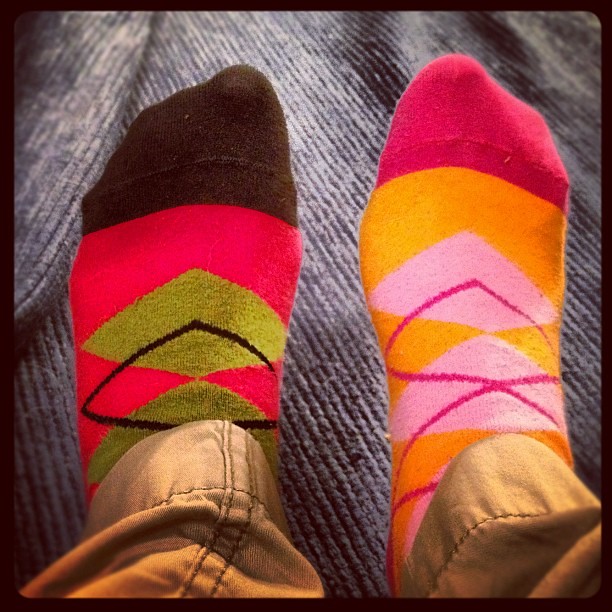
We’re two pint glasses drying upside down on the draining board. We’re the two Christmas tree lights that never work. We’re the last two petals to fall from the bouquet. We’re the two minutes to go before the alarm goes off. We’re two leaves that blew through the open door before it swung shut. We’re the two ornaments missing from the shelf. We’re the jumpers they use for goalposts. We’re nightclub turntables with a mixer in between. We’re the front and back covers of a magazine. We’re two grains of uncooked rice that missed the pan. We’re two twisted cigarette stubs in the ashtray. We’re two raindrops racing each other down the window. We’re two mismatched socks that have been paired somehow. We’re two weeds growing up through the driveway. We’re two reserved seats at a restaurant. We’re the two drips that come out the tap when it’s turned off.


Be with me. No one else.


———

Click here for more Prose

Click here to follow clarkspeak on Twitter

25.8.16

On finding out my ex-girlfriend was cheating on me


An open letter.


Today, nearly four years after our six-year relationship ended, I found out you were cheating on me.

Things had started off so well between us, in that first naïve summer when neither of us had any worries in the world. Then I went back to university, and you went back home to save up for your first year at drama school.

Was it then that it happened?

We lived 250 miles away, and it was challenging. It seemed particularly tough for you, who had a job washing pots and was jealous at the thought of me living a more exciting student life in which you worried my head would be turned. But I’m a decent person and I stayed faithful. I wished you’d believed me. You needed reassurance so I texted and called you with regular updates, sometimes 30 times a day. And whether I was reading at home, walking to the library, at a gig, or wherever, I was always honest. Every two or three weeks you knew exactly where I was anyway – with you, at your parents’ house, where I spent my student loan travelling to.

Was it then that it happened?

Later that year we hit a rocky patch. It was my second year living in a big city and I was changing. While it was still tough seeing you wave me off from the station platform after spending another weekend together, once I was at the other end I had exciting stuff going on that you were never part of – and didn’t want to understand. One day in the holidays I tried to end our relationship. You begged me to stay and I wasn’t strong enough to see it through, so we gave it another go. That night I told myself things would get easier when you went to drama school, but to be honest it felt like a missed opportunity.

Was it then that it happened?

And things did get easier. You were busier and happier at drama school. You still wanted to know what I was up to and with whom. You said you wouldn’t get upset when I told you, but whenever it involved a female friend, you did. I would spend hours reassuring you, often missing out on conversations and memories with the people around me because of the lengthy phonecalls and texts needed to put your mind at ease. I tried to lead by example by never questioning where you were going or which friends you were spending time with, but it didn’t work. A lesser man would have just lied to you. Despite that, I was excited to visit you. The train prices had gone up, but I got the one at 5am so I could afford it.

Was it then that it happened?

The weeks and months were flying by and pretty soon I was in my final year. We were both doing well and I was optimistic about our future. I was going to be a writer – you an actress. Together we would embody the virtues of following your dreams, doing what you were born to do, and working your ass off to get where you want to be. I knew we could do it.

Was it then that it happened?

After I graduated I went travelling. I remember being our goodbyes at the bus station. It felt like the end of that first summer – just, wrong. Every day I was out there was a countdown to seeing you again. My fingers were sore from writing about you in my journal. I knew that when I returned, you were the girl I would settle down with. I wasn’t afraid of committing. Being away from you for so long gave me that clarity. I remember the teary international phonecall from a payphone somewhere, when I said I was at the halfway point of my journey, and I was now pretty much on my way back to you.

Was it then that it happened?

When I got back, I got a job in the city where you were studying. For a while I lived with you and your flatmates, but I knew it was temporary, because we weren’t ready to take that step just yet. At least I was in the same city as you, and we could see each other all the time. With everything we’d been through, all the train journeys and long-distance calls, we’d really earned that right.

Was it then that it happened?

A year later I took a job out of the city. It was a career decision and we agreed it would be better to give you that extra time to study for your final exams and performances. Sometimes you doubted yourself, and I’d try to motivate you by saying stuff like “you’re special”, “look at how far you’ve come and what you’ve achieved. You just need to keep at it and it’ll happen. It could happen tomorrow”, and “in the end you either succeed or you give up”. I couldn’t bear you to give up on your dreams. Too many people do that. When you graduated with 1st class honours, you thanked me for it. But I said it was all you.

Was it then that it happened?

You moved back home after graduating, and got yourself an agent! Things were looking up. See, I told you things would work out if we stuck at it. We visited each other every few weeks or so, but before long I was in a situation where I needed to find another flat, and we took the opportunity to move in together. We went for a drink to celebrate signing the contract. When you went to the bathroom I remember thinking how happy I was that you’d convinced me to stay with you all those years before.

Was it then that it happened?

I took care of the rent – you helped out with the bills. It made sense, because I was the one with the permanent income. Even if it wasn’t a very good one, it made me feel good to provide. I was happy to support you in getting your acting career started. You couldn’t get a full-time job anyway, because you needed to be available for auditions. You did a few adverts and local theatre jobs here and there, and we celebrated each and every success.

Was it then that it happened?

You seemed tired when we were coming home from spending New Year’s with some of your family down south. When we got back you looked at me and said you were going to stay with your mum and dad for a while, because you needed to think things over. I thought you were kidding. You said: “I might come back in five minutes, or I might never come back,” and left. Our luggage was still on the floor.

It wasn’t nice not knowing. I didn’t want to tell friends and family in case you did come back and they knew we were having problems. I was in limbo. Whenever I’d hear a car slow down outside I thought it was you. But it never was and I got over it and moved to another city to start my next chapter.

I wish you had told me when you started to want different things, rather than do what you did. But thank you. Thank you for adding another twist in the narrative of triumph my life will eventually become. There will be more knocks to come I’m sure. Along with the bullies at scouts, the doubting school teachers and the father who left me as a two-year-old boy, you are part of the crowd who inspires me to go further and better to prove wrong.


———


Click here for more Relationships

Click here to follow clarkspeak on Twitter

25.11.13

#foundfiction – The Publishing Experiment That Connects with Readers Around the World


#foundfiction is a publishing experiment that aims to circulate new writing in public spaces around the world. At bus stops, on trains, in parks, bookshops and art galleries, it's been dropping short stories contained in envelopes marked READ ME – sort of like a message-in-a-bottle type of thing.

The idea behind the project is simple. When someone stumbles upon a piece of #foundfiction, they let people know by finding #foundfiction through the hashtag on Twitter or Facebook, and hopefully their day has been brightened. That’s it.

#foundfiction is not trying to compete with the big publishing houses or the ebooks market – it's trying to get through to readers by being in the right place at the right time.


It's keen to hear from any creative writers – emerging or established. They can send their material to fictionfound@gmail.com, and it will be printed and distributed for free. The project is purely about writing and reading. It’s all anonymous, so while the writers themselves won’t be getting exposure, their work will – and they can be safe in the knowledge that they’re getting a global, yet unsuspecting, readership.

#foundfiction is only a few months old, but it's already established a network of writers and distributors around the UK – and as far as the USA, Canada and Australia.


As for what the future holds, I'm not so sure. Perhaps it will extend its community across the world and potentially have pieces of #foundfiction translated into different languages, but who knows what’s around the corner? What it has is not a business model, but a quirky concept that can inspire people. If it ends up changing the world, it’ll be one envelope at a time.

#foundfiction on TwitterFacebook and Google Maps


———

Click here for more Culture

Click here to follow clarkspeak on Twitter

12.12.12

Dear Diaz


UNDATED, UNADDRESSED LETTER FOUND AT

GREYHOUND BUS STATION
100 W MCBEE AVE
GREENVILLE
SC 29601

TELEPHONE MAIN: (864) 235-4741
BAGGAGE: (864) 235-4060
GREYHOUND PACKAGE EXPRESS: (864) 235-4060


Dear Diaz,

I really fucking wish I were you right now. You’re just opening your eyes as the sun flickers through the curtains in your bedroom, aren’t you? Mum’s risen early to make you a huge breakfast; you’re beginning to feel safe in familiar surroundings. Last night, you ate a large dinner with your family and then discussed some of your experiences out in the field over a good few beers with dad. Ice-cold beers. Tonight you’re probably going to meet with friends in your town, spend some time with a girl you haven’t seen in months – or years – get laid, and generally have a good time.

Do you want to trade places? You wouldn’t believe how envious I was of you when you returned to Atlanta and embraced your parents, right here in this bus station. Of course, you completely deserve it. Where did you serve? Afghanistan? Helmand? I had a couple of friends out there. I see them when they come home on leave, maybe once a year. Sad how some of them get into fights … [illegible handwriting] … they never used to be like that, before they signed up. I imagine it’s pretty difficult to deal with, working hard to adapt to a life of such discipline and order, only to discover that the streets at home inhabit so much of the opposite when you return. Beefed-up Neanderthal jocks taking advantage of girls dancing to bullshit chart tunes on tables of booze, is what you’re fighting for out there. You’ve given your own sweat and blood and seen men you knew die for this. It’s an insult.

Your shoes had been shined very well, I recall. You wore a sand-coloured military shirt and grey trousers, and carried a bag that looked heavy. The bag had wire hangers poking from it, and lay on the tiled floor as you held your sobbing mum. Your thick-framed spectacles matched your dad’s. You looked alike, but he had slightly longer hair. Still a crew cut. He wore a t-shirt bearing a photo of you in your full military gear, standing next to the stars and stripes. He looked oddly solemn, but I don’t doubt for a second he was thrilled to have you home – he just didn’t seem to know quite what to say, or how to feel. Then you started laughing into your mobile phone. I tried to eavesdrop over the CNN bulletin on the TV screen, before realising you were speaking Spanish. Your parents waited for you to finish the call, all the while looking at you and not talking to each other, then your dad took the bag and you all walked into the parking area outside.

I sat a few benches away while this was happened, but, unlike you, I won’t be going home for a long time. I was supposed to have spent last night in Charlotte, but things went wrong. I was supposed to have my bus pass ‘redeemed’, or something, and then get my connection to Charlotte – but it didn’t quite work out that way. For a couple of hours I stood at the ticket desk, trying to reason with an angry man who wore the expression of someone who’ll probably one day develop fairly severe blood pressure problems. He was supposed to ‘redeem’ the sheet of paper I had into a bus pass, which would enable me to travel on any Greyhound bus service around the US for the next 60 days. I don’t think you had the displeasure of encountering him, but, trust me, he was useless. Angry and useless. He didn’t understand what ‘redeeming’ something meant, and never really tried to, so I missed my bus from Atlanta to Charlotte.

I tried calling Greyhound, but some girl at the other end could only repeat the very same sentiments printed on the sheet of paper I had, which the ticket desk guy couldn’t understand. “We’ve never seen anything like this before,” he told me, chewing gum like an arrogant cliché. “Especially not concerning anyone that’s from Ukrainia.” I’m not from Ukrainia, nor does any such place exist. He told me to wait while he called up the numbers printed on the sheet. That came to nothing. He claimed he was being kept on hold and obviously had to serve other customers in the meantime. When they did get through to someone, I overheard him say I was from Canada. He really didn’t give a shit.

I tried to call my travel agency’s US branch from a pay phone, but this also came to nothing. I even tried to call its offices back home. Nothing. I met this girl who started saying things like: “don’t panic, you’ll get there when you’re meant to” – as if it was supposed to help. The security guard was trying to cheer me up, I think, telling me stories of tramps coming in begging for $1 to get to the hospital – one guy apparently doing this while carrying his right eyeball and most of its socket.

About five minutes ago I gave up and bought a regular ticket for another bus service. $87 from Atlanta to Charlotte. Not bad, really, only it doesn’t leave until 11pm and won’t arrive until 2pm tomorrow.

I have about three text messages to let my girlfriend know what’s happening, which will hardly reassure her. I miss her so much – everything seems infinitely blissful and simple in her arms. If I were thinking straight, I’d write her a poem.

[page missing]


I often remember
holding your hand
skipping in rain
dancing on sand.

Never such innocence
before nor since
that spread, like … [following line crossed out]


This bus station’s pretty uncomfortable for me. People stare at me with suspicion. I’m not really doing myself any favours – I’m an odd-looking guy with an accent, dressed in linen and moccasins in a station that’s quickly taught me that only the poorest Americans ride the bus. Plus the only other white people in this place are on the TV screen, reading the news. But I don’t feel as scared as I perhaps should. Perhaps looking pissed off makes people stay away from me.

--- --- ---

For ten hours I sat next to a large man who must have gotten through at least half a dozen bags of crisps. The crunchiest crisps you can imagine, as the lights of northern Florida and Georgia rolled past the window. In between the lights was the dark, which allowed me the pleasure of knowing I was in motion without being able to tell how little things were changing outside. I sat upright and clung to my bag, trying to get some sleep. We stopped at a couple of lonely gas stations in between Savannah and Macon, just in case we wanted to get our hands on one of those tasteless sandwiches from a fridge that probably contains traces of the urine of hundreds of truckers. I elected to stay put and take the opportunity to get comfortable. A couple of people had left the bus and I could almost slouch across two seats and close my eyes. But then the driver’s voice boomed over the crackly PA: “Welcome to Greyhound. No loud talking, no cellphones, no music, no cursing.”

I wanted to sleep for the whole journey, to avoid feeling more miserable than I did when conscious, but sleep wouldn’t visit me – I was way too stressed and distracted to get any shut-eye – and the longer I stayed awake, the hungrier I became. I began to evaluate the concept of waiting … [illegible handwriting] … I mean, how much of a person’s life is spent waiting?

And why do I always happen to be sitting next to an emergency exit? At home and here … [illegible handwriting] … symbolic? A journey between one stage of your life and the next, but always the option to change your mind?

--- --- ---

Perhaps there were a few copies of Great American Novels floating about within your quarters/barracks/whatever out in the field. Have you ever read On the Road? I’d suggest you do so, though I fear its appeal has become somewhat over-saturated here on its home soil. This is summed up almost perfectly in the form of an arcade machine back in Jacksonville, where I boarded, called Road Trip. It involves the player attempting to navigate their way from New York to Los Angeles, via Chicago and Denver, picking up different cash prizes, the value of which corresponding to the distance travelled.

I’m now somewhere in Greenville, SC. Fortunately a nice lady has sorted me out with some tickets and a temporary bus pass. I’m taking some comfort in the fortune of still being about use the rest of my travel funds to buy a one-way flight back home. However, I figure that after this journey, which will total 24 hours by the time I’ve arrived in Charlotte, I’ll be ready for anything Greyhound throws at me next. Surely it can’t get any worse than this.

I’m pressing ahead with my trip for now, in spite of all these obstacles that I bet sound irritatingly mundane to you. Are you rolling your eyes at this? Someone like me moaning to someone like you about late buses. Pathetic. But I just really wanted to share this with you. I miss home.

Anyway, man, my bus north leaves in a little while. I sincerely apologise for the rant, I really do. I’m fully aware that neither myself nor the experiences I’ve described mean anything to you. I just want you to know that I cannot remember longing to step into someone else’s shoes quite as much as I did yours, many, many hours ago, and I’m not sure you would expect that, given all the horrors you may have seen and memories you wouldn’t wish upon anyone. I hope these don’t continue haunt you, if they ever did, and that you really enjoy your time at home.

All the best,

x

--- --- ---

There’s no bus. The nice lady’s gone home and the sun’s going in again. Not sure how long I should sit here waiting for. It feels cloudy behind my eyes. Sleep deprivation driving me mad … [illegible handwriting] … and I can’t face another minute in this station. A man who’s offered me a place to stay said he’ll be back shortly to collect me if this bus doesn’t turn up. He looks strange but so does everybody.


———

Click here for more Prose

Click here to follow clarkspeak on Twitter

Click here to follow clarkspeak on Facebook
8.11.12

Pillow Talk for Insomniacs


Hello,

Please can you stop the church bells ringing? I haven't slept for five weeks.

Every 15 minutes through the night is extremely inconsiderate, not to mention completely unnecessary, for the surrounding residents — many of whom have converted to atheism as a result of the noise.

I appreciate that you feel you're doing God's work, but, really, if the old man in the sky condoned this, he wouldn't have given us ears.

Please understand that I've tried to present these concerns calmly and with clarity here, despite the ruthless, perpetual DONG... DONG... DONG... DONG... DONG... DONG... DONG... echoing around my truly shattered brain.

I get frustrated at not being able to string basic sentences together in speech, I'm so tired. It's become a task to raise a spoonful of porridge to my mouth, or spread jam to the corners of a slice of toast, because of the shaking. My eye sockets actually feel like they've been raped.

So do let me know if I'll need to get a petition together or go through the courts to ensure I have any hope of getting even 40 winks in the future.

Please.

Yours,

———

Click here for more Prose

Click here to follow clarkspeak on Twitter

Click here to follow clarkspeak on Facebook

13.11.08

An Ode to Coppaccino


Published by Qmunicate

Qmunicate's sensitive columnist struggles with the loss of his place of work.

Readers, I am grieving – Coppaccino has closed down. If not a business familiar by name, it is surely one familiar by sight; the trio of police boxes – one on Buchanan Street, one near Kelvinhall and one outside the Botanic Gardens – which were converted into booths used for selling coffee? Yes, they’re gone – and only their rusty, graffiti-laden corpses of metal remain.

For six years they stood a bold 9ft tall and 4ft wide, but high above any of their rival cafés in the west end or the city centre. Its employees sat in the box and operated a hissing, spluttering machine which churned out a variety of £1.30 coffees and 80p teas, with a range of cold drinks and snacks hiding underneath in a small fridge. Its architect Gavin Wright served his last caramel latte in September, when he turned out the light and locked its door in pursuit of another business.

Coppaccino was my first job in Glasgow. Needing to make ends meet as a lazy first year student staying in Winton Drive, I’d dropped off my CV at the Coppaccino outside the Botanics – simply because it was the closest possible place of employment. Gavin called me a few nights later and arranged me an interview. It took the form of me standing outside the box, while a girl sat inside grilled me on my customer service experience. After a short trial shift that same day, I got the job. “Any advice?” I asked the girl, who was resuming her shift. “You’d probably better bring something to read,” she replied.

She was right. On rainy days outside the Botanic Gardens, I’d serve perhaps six people in as many hours. Over the next few weeks, I did all my exam revision and essay plans in the box. I even wrote some poetry and started a novel. The only problem was that the rain often blew in, and in such a case a mangled umbrella was provided to hang from one of the door hinges. There was also a small heater and a radio by my feet, and we were allowed hot drinks from the machine so long as we noted it an old 1980s till. At the end of the shift I’d just clean up and wait for Gavin – the man with they keys – to come and lock up.

Coppaccino was unofficially The Smallest Workplace In The World, but Gavin could never get it recognised by Guinness Records. As more people filled the streets when Glasgow got dryer, working within such an enclosed space prompted every second customer to ask: “Do you get claustrophobic in there?” to which I tried to reply differently every time. The customers themselves were a mixed bunch; loyal regulars, curious passers-by – occasionally bemused strangers would just stop and stare for uncomfortable stretches of time.

Ultimately, that’s why working in Coppaccino was the best job I’ve ever had. It was the perfect place for people-watching. On any given day I would serve bleary-eyed students still high from clubbing, wealthy businessmen rushing off to conferences, Big Issue sellers exhausted from selling all day on the streets, junkies demanding sachets of sugar, inter-railers urging me to pose for photographs, Polish workers needing directions, opportunist Jehovah’s witnesses making the most of my inability to escape...


The fantastic contrast of Glasgow was painted on a giant canvas right in front of me every time I stepped inside. I don’t feel like I’ve lost a café; I’ve lost a window – however narrow and rusty – to this city.

22.6.08

My struggle: Two years of double standards on the shop floor

Website - 7 November 2005


I’ve taken some time off from my meagre chores of replenishing the bacon section and slapping half price stickers on oranges to scribble some notes on the reverse side of some advertising for ‘Jumbo Salted Peanuts’. People around me are contently placing own-brand beans on shelves and mopping up wine spills while the 80s-biased radio is humming Nik Kershaw’s ‘Wouldn’t it be good’ for the thirteenth time over the Co-op airwaves. But if you don’t like new wave music, it gets much worse here.

I applied for a job at Co-op when it was a Safeway store just over two years ago. I over-eagerly wrote my details on an application form that bore the shiny, plastic grins of two ‘workers’, handed my form in and then waited. Within a fortnight I was jogging around with milk dollies in a pathetic effort to please my superiors, but within a few months, my enthusiasm was fading like the colour of my lime green uniform. I’d befriended a few other young people in my position – students who had been working just a few months. One of them jokingly remarked: “I’ve got amnesia. I can’t remember why I applied here.”

Working at my local supermarket has also completely reversed some of my economic views. In two years, I’ve gone from being a ‘free-market freak’ – babbling about efficiency and the importance of profit – to a soft Marxist. My political views have also been dragged over to the left and I now have a problem with authority.

So why did things change? Let me explain. Three people call the shots at my work – the managers. Just below them in the hierarchy are the supervisors – the people in charge of particular departments. Finally, there’s me and the rest of the proletariat, or “the bottom of the barrel” as we are described by the Human Resources Manager. We unload the goods that are delivered from the depot, fill shelves with it and then go home, with a few added menial tasks sandwiched in between. The next day we do the same, starting as early as 7am, finishing as late as midnight. If we finish the job before the end of our shift, we do someone else’s job until we are scheduled to finish. We are granted three (unpaid) breaks per day for a nine-hour shift, and I earn around £170 for a 37-hour week.

And the unwritten rules… we cannot chat – to neither workmates nor friends; we are picked up on things like “working with one hand”; people from the same department cannot take simultaneous breaks; we cannot take more than our allotted breaks; we cannot use mobile phones on the shop floor; we cannot chew on gum; we cannot work together – to name a few.

And here’s the day of a manager: they turn up to work no earlier than 9 o’clock, hold a meeting with supervisors, tally up their profits and costs (incidentally as a store we do quite well). They have no allotted breaks – but this works to their advantage as they are not deducted pay from the breaks they do take (as their breaks are unrecorded). One of my workmates spotted one manager take eighteen breaks in one morning. At around 2pm, they begin filling shelves like the rest of us. They always work in twos (what rule book?) whilst they chomp on Wrigleys (rule book…) and check their mobiles. The manager is paid a fixed wage of £3,000 per month and works less than I do.

For people like me, it is easy to spot inequality, double standards and hypocrisy – we are earning disposable income, not a living. But for people who have made a career out of stacking cheese, it is a lot easier to ignore the issue. A woman I work with has been working here for fourteen years – whenever I raise a conversation about this she ponders me for a moment, before shrugging and sighing “I know…” she continues to open boxes of tomato juice while the managers pocket the receipts upstairs.

The people whose careers are made from this place divide into two groups. In group one are the people who ignore these issues and simply want to earn their living, when in group two are those who view the inequality as something they can skew to their own advantage. Patronage has been an active hobby among the staff at Co-op – one woman who supervises her workers on the Delicatessen is given huge amounts of time off work (to share with the managers) in return for her maintenance of the double standards. Other manager cronies call their customer friends over to have a chat, but are quick to separate us from a casual chat, which we are not entitled to.

In a very real sense, they are stamping out the very things that make mundane jobs bearable. A chat with a colleague, a sneaky fag break – they’re fast becoming rights confined to the dustbin of history. And so now we are faced with the very cold ambiance of the smoking room – the break which a workmate and I share with a couple of managers. “No one talks. There is no morale here. To them we are just human resources, not people,” my friend comments as the two managers vacate the scene, chuckling.

Recently, I found myself voicing these concerns to someone above my level for the very first time. I’d been taking a break, defiantly, with a friend (who was a member of a different department) – we were heading back to work when two managers (the only two working that day) objected to us being on our breaks at the same time. I was about to utter “practice what you preach” but instead, like on so many occasions, I spoke to someone else. My Human Resource Manager listened closely. The essence of his argument was based around maintaining and increasing profits, and the basis of mine was the concept of morale, and how it would improve productivity if we gain more respect. At the end of my “rant” he said: “Why have you not told any of the managers about this?” I replied, “I’m a coward and I want to keep my job.” “Well they definitely think it’s a case of you versus them. Do you want me to mention it?” he said. “That would be nice,” I replied.

But why on earth would they listen? In December last year, I wrote a letter that highlighted my concerns with the large amounts of good food we throw away – I was motivated by the terrible scenes of starvation in the Boxing Day tsunami aftermath. I proposed that we try to distribute the food over there somehow, or at least to the British homeless, rather than have it burnt like we currently do. Indeed, one manager did speak to me about this – only to tell me “it’s more efficient this way” before shredding my letter.

I’ve since found comfort by attempting to organise a workers’ revolution, or a coup. The idea is very much pretend – my workmates and I joke about using trolleys as makeshift trenches and pork pies as weapons. But, if I’m honest, I’d love to fly the red flag over this place.